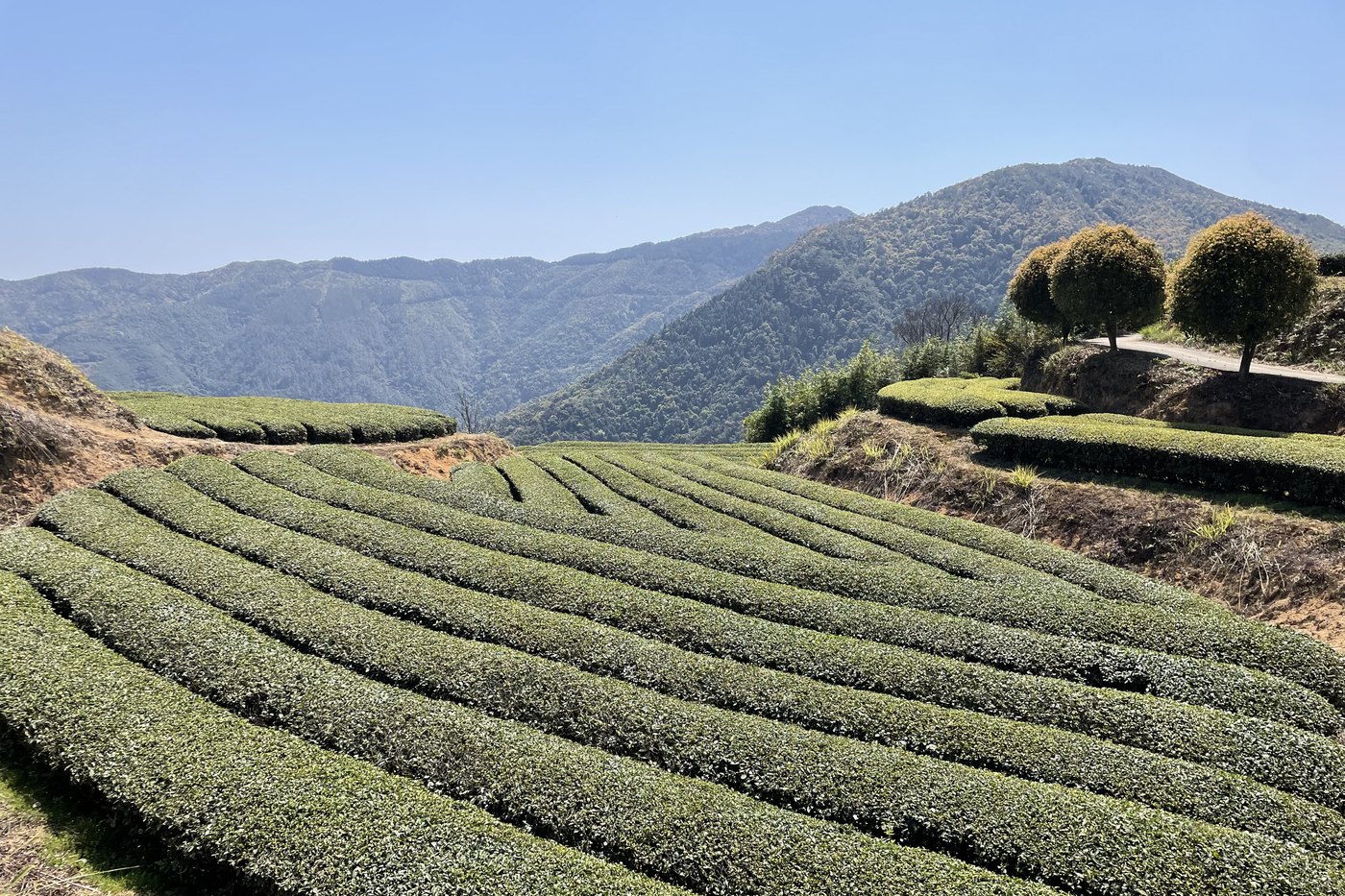
Adults with intellectual and developmental disabilities grow, process, pack and sell Tieguanyin here, on gardens the village had left to run wild for ten years.
The lodge was set up jointly by the Xiamen Aihui Autism Rehabilitation Center and Quanzhou Tianxiangyu Ecological Agriculture, and it supports people for life rather than up to an age.
Xidong 25, Lindong Village, Huqiu Town, Anxi County, Quanzhou, Fujian.
Who it is for
Two problems with no answer — until they met.
Nothing here was planned as a social enterprise. A father solved the problem in front of him, then the next one, and the shape of the thing only became clear afterwards.
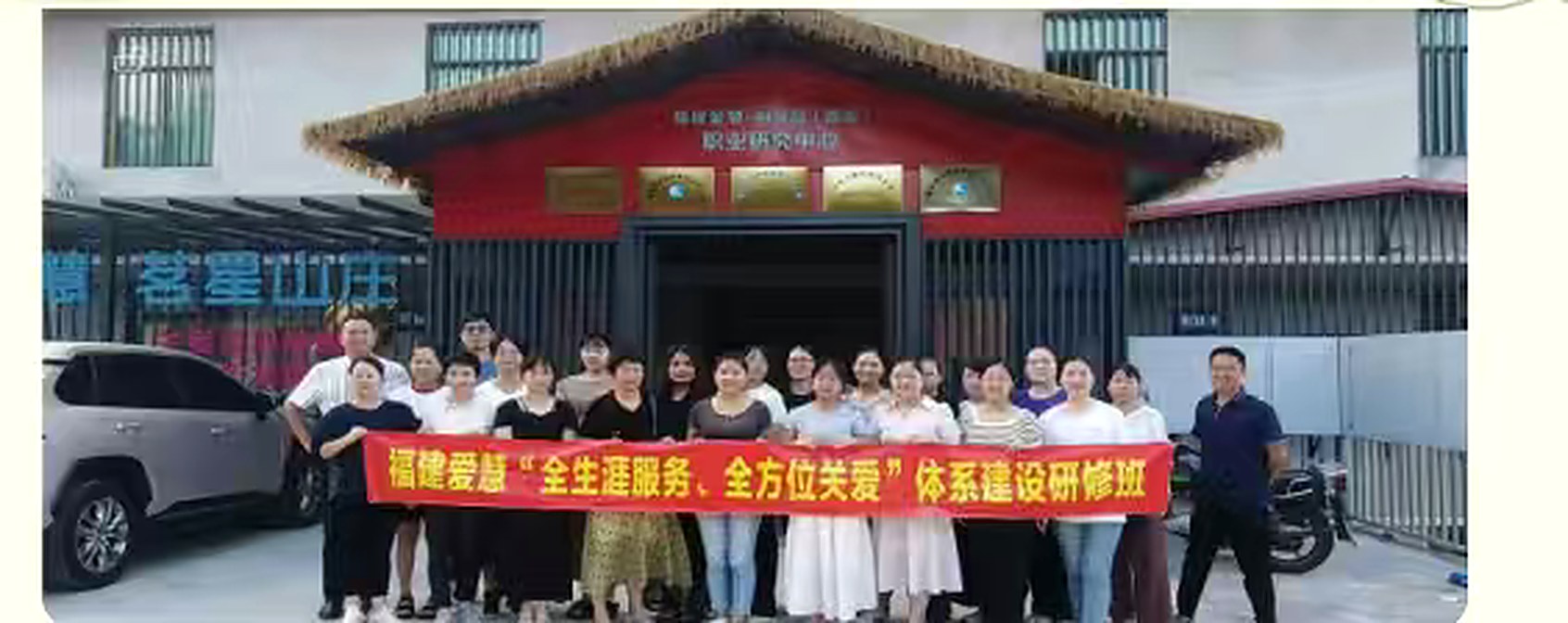
A lifelong-support training course, held at the lodge itself. The banner reads 福建爱慧「全生涯服务、全方位关爱」体系建设研修班 — building a system of whole-life service and all-round care.
2009
A father with nowhere to send his son
Gao Quanfa's autistic son was turned away by nursery and school alike, and families in Fujian were shuttling to Beijing, Shanghai and Guangzhou for therapy. He founded Aihui in Xiamen so that they would not have to. Sixteen years on it has served more than 5,000 children and their families.
2016
Grown up, and still nowhere to go
Those children reached sixteen. Therapy ends at that age; adult life does not. In the same season, back in his home village of Huqiu in Anxi, Gao found tea gardens that had been left to run wild for ten years.
September 2016
The lodge
With the master tea makers Gao Shuimu, Gao Haijin and Gao Yahuang he founded Quanzhou Tianxiangyu Ecological Agriculture and began building. Neglected land became a workplace; the workplace became a home. Tea supports the members, and the members grow the tea.
The work
Not a workshop bolted onto a farm. The same place.
The gardens are worked without fertilizer or pesticide — Tieguanyin grown the slow way, in mountain air that stays mild through the year.
Growing, first processing, packing and selling all happen on this hillside, and every step has been broken into standard, low-barrier tasks that someone can learn and be paid for.
The reversal is the point: people cast as recipients of help become the ones producing something other people choose to buy — and the village gets its tea gardens back.
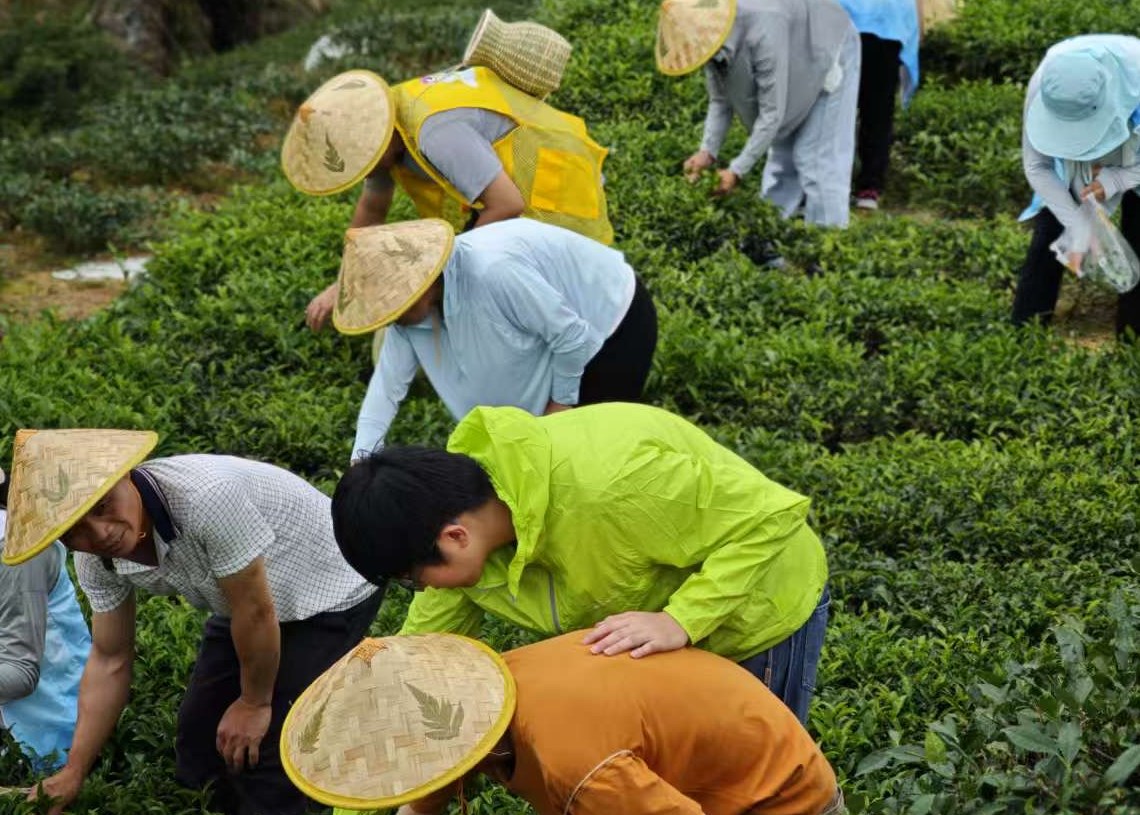
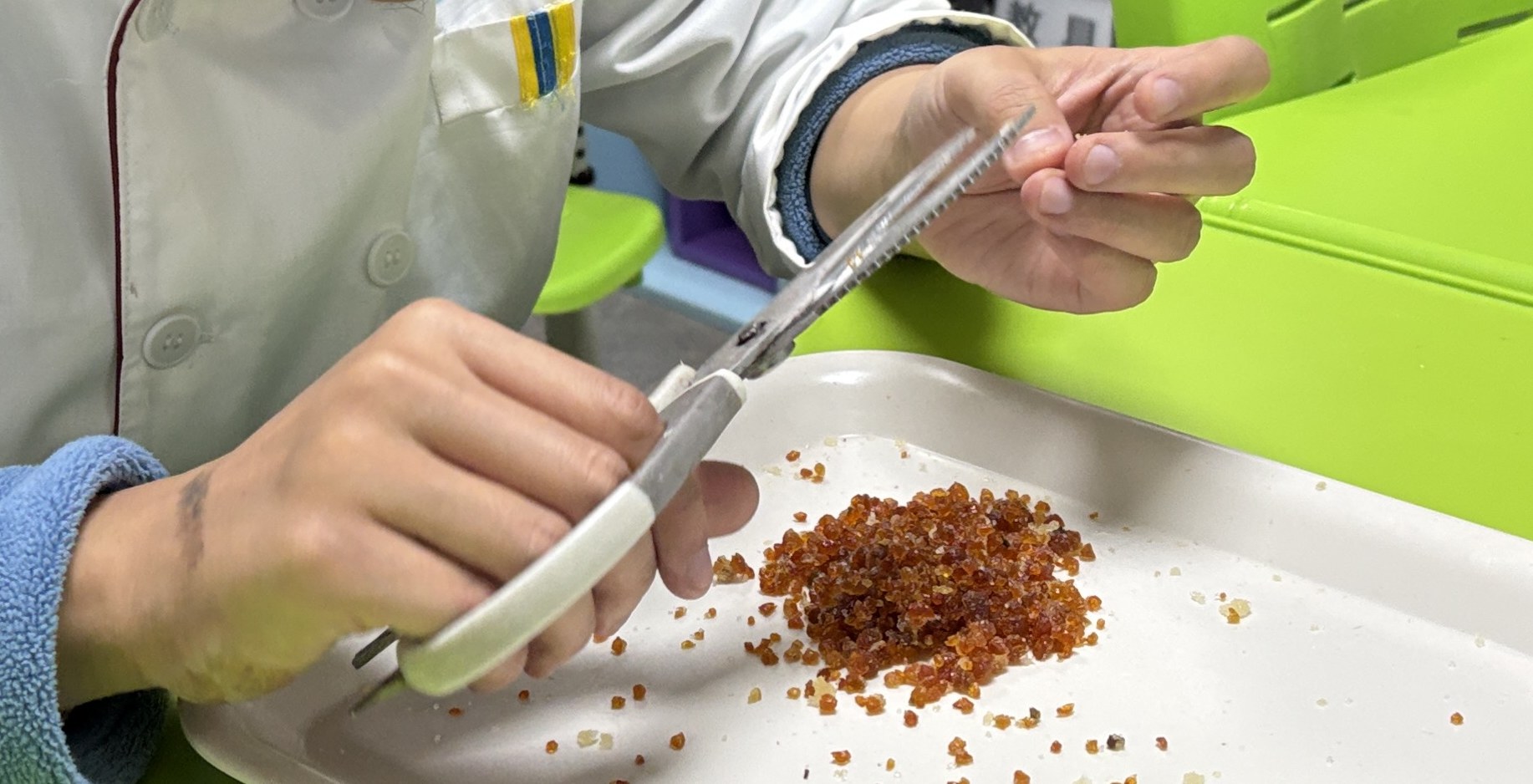
Picking day on the terraces. Members, staff and neighbours work the same rows.Sorting by hand, piece by piece. Every job here is broken into steps that can be taught, practised and paid for — which is what makes it work rather than an activity.
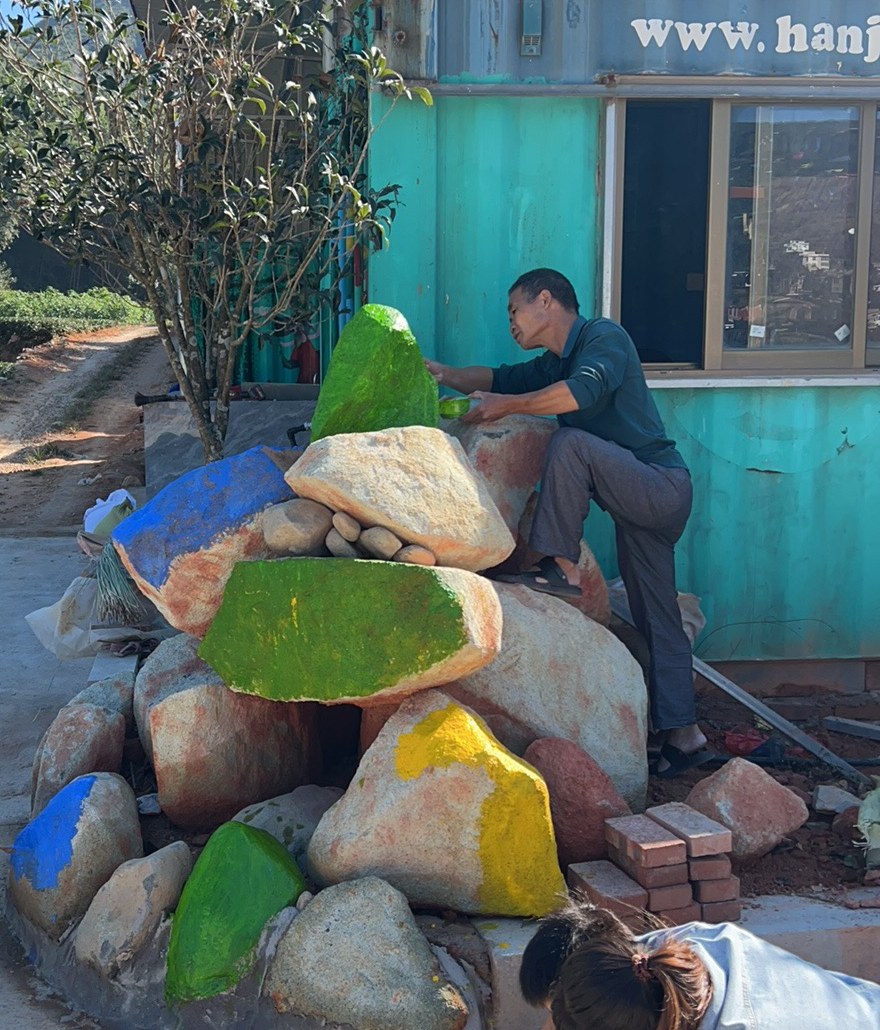
The boulders at the top of the track, painted by the people who live here.
A day here
Four things, on one hillside.
The lodge describes itself as one chain, not four separate services: recovery flows into residential care, care into employment, and employment into a place in the community.
Keeping all four in one place means nobody has to qualify for them one at a time — and nobody is moved on when they turn eighteen.
康复 → 托养 → 就业 → 社会融合
Employment support就业帮扶Tending the gardens, making the leaf, filling and finishing the boxes — plus tea ceremony, animal care and handcraft. Each job is entered through a training placement, so skill is built in order rather than assumed.
Residential care托养照料A group home with proper rooms, an art studio, a Chinese kitchen workshop and a sports ground. Cooking, laundry, handling money and getting yourself to work are taught in the place where they will be used.
Tea-culture study visits茶文化研学Neighbours, school groups and visitors come up the hill to pick, roast and brew. It keeps the lodge part of the village rather than set apart from it — and the members are the ones showing people how.
Lifelong support全生涯支持Time in the tea garden, hand-work at the bench, painting and music, and walks through the terraces — therapy that looks like a day's work rather than a clinic, and carries on for as long as it is needed.
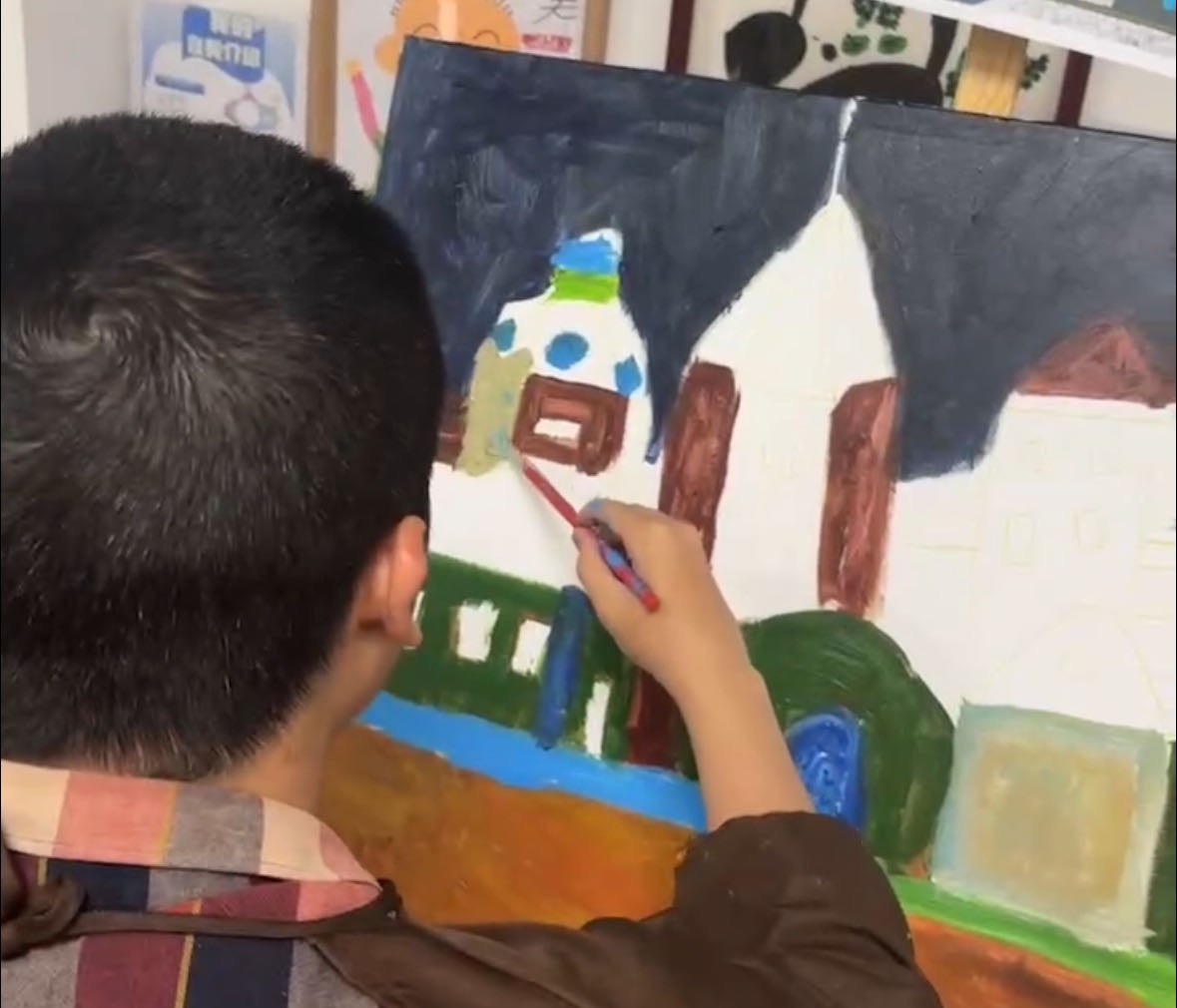
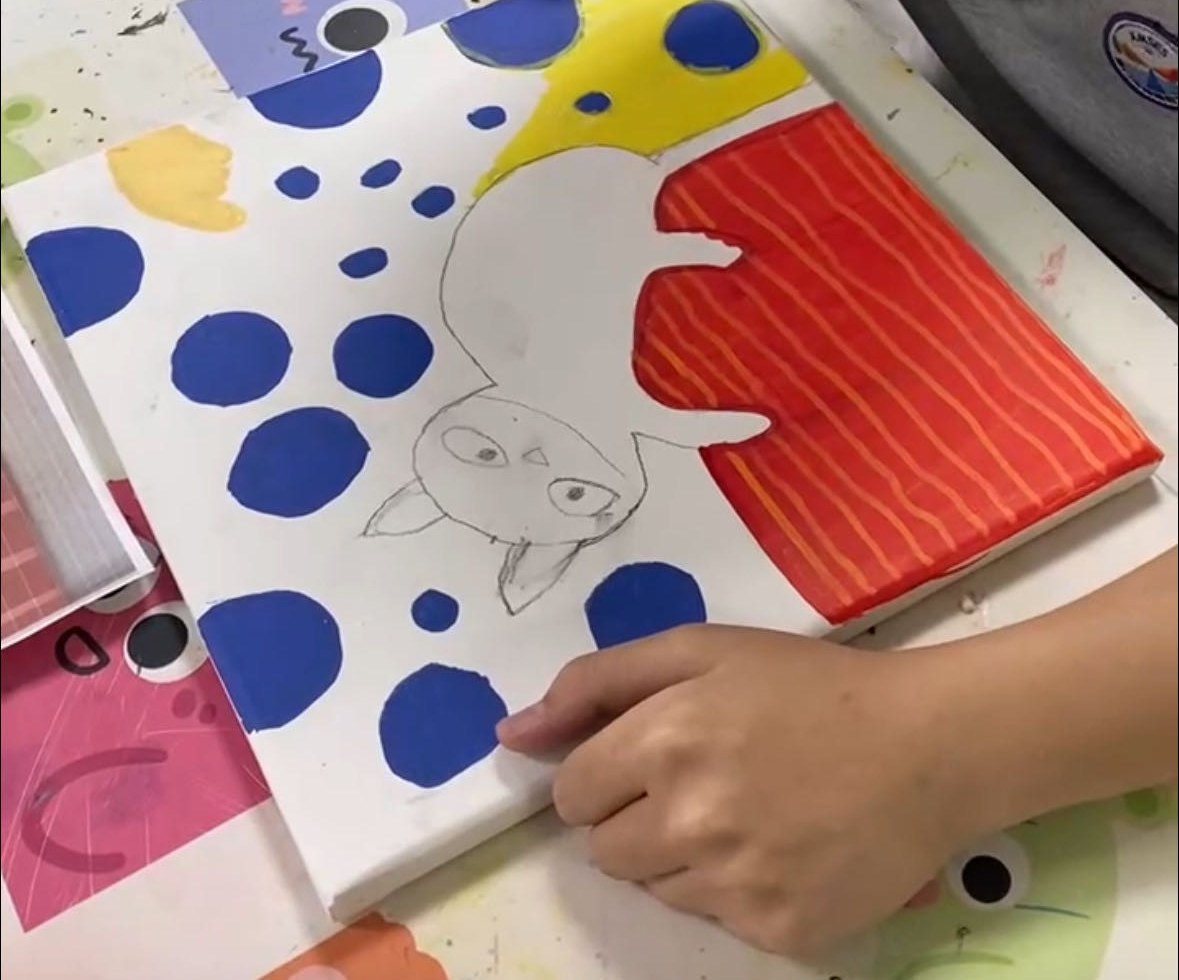
Between the tea seasons the art room runs, and the animal that goes on each year's gift box is drawn there. Painting is part of the week here, not a reward for the rest of it.
A member at the easel. The work is his, start to finish.Drawing at the bench, one line at a time.
Who sells the tea
Quanzhou Tianxiangyu Ecological Agriculture
Not a charity counter selling sympathy — a working tea business that happens to be built around its people. It grows, processes and exports oolong, green, white and black teas, takes on OEM work, and develops gift lines.
Founded in Anxi
2016
Staff, including 15 tea masters and 6 in quality control
50
Exported in 2024
20 t
Food production licence and pesticide testing for the EU and US
SC · SGS
Germany, Taiwan, Singapore, Malaysia
4 markets
Awarded first prize at the Fujian Tea People's Home competition
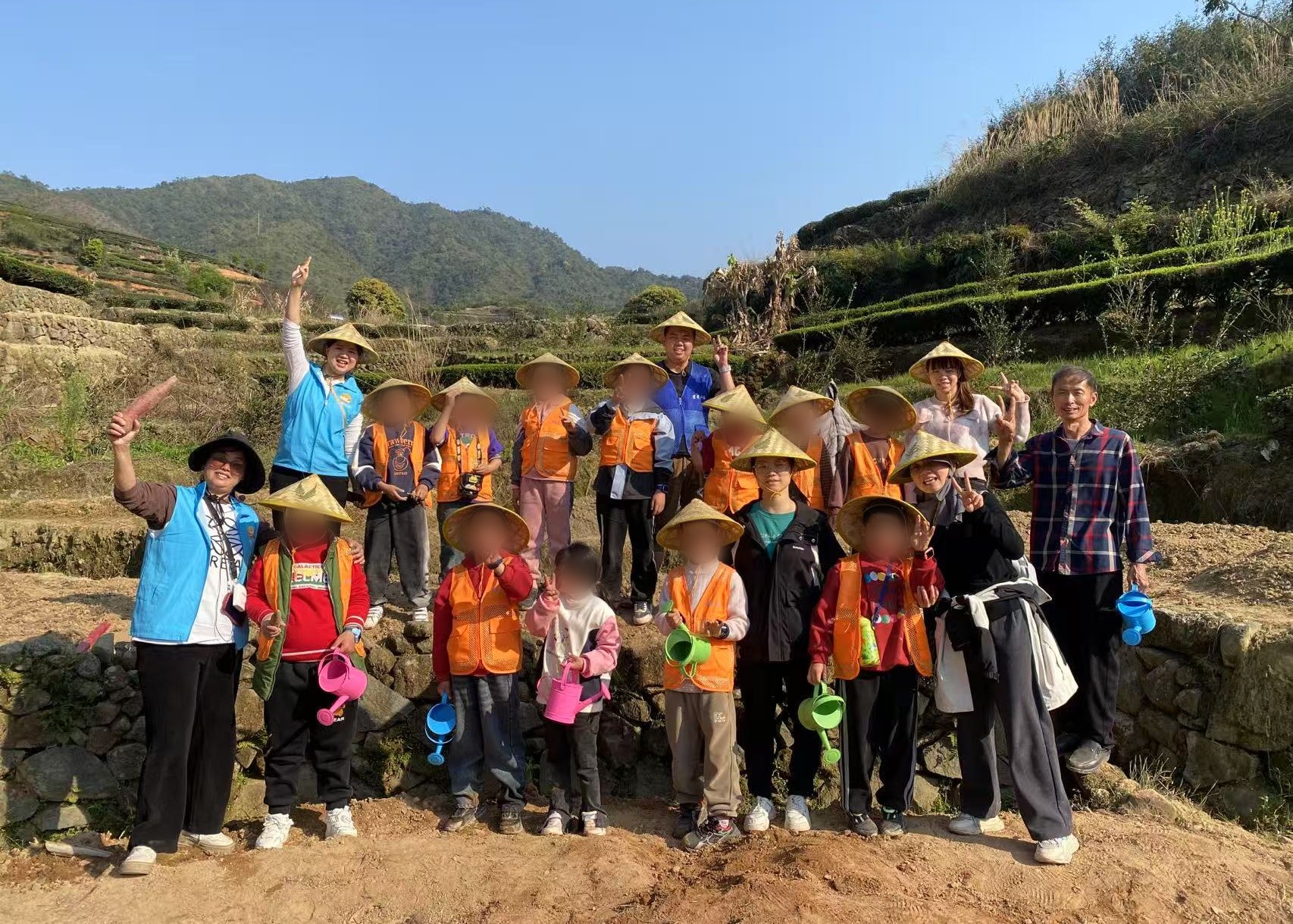
A school group on the terraces with the staff and volunteers who ran the day. The lodge is not set apart from the village — the village comes up the hill.
以茶为媒,赋能星青年 · Tea as the bridge, supporting the children of the stars
“One tea garden to wake a village. One cup of tea to warm a life.”
“The children of the stars” is what autistic children are called in China, and it is the phrase the lodge uses for the people it exists to protect.
The lodge aims to become Fujian's first small town built around mountains, tea and independent living for people with disabilities. Ten new residents aged twelve and over are being taken on now.
Prourgn works with the lodge from Japan: buying and placing the tea, bringing Japanese employment-support practice to the site twice a year, and introducing people who want to see it for themselves.
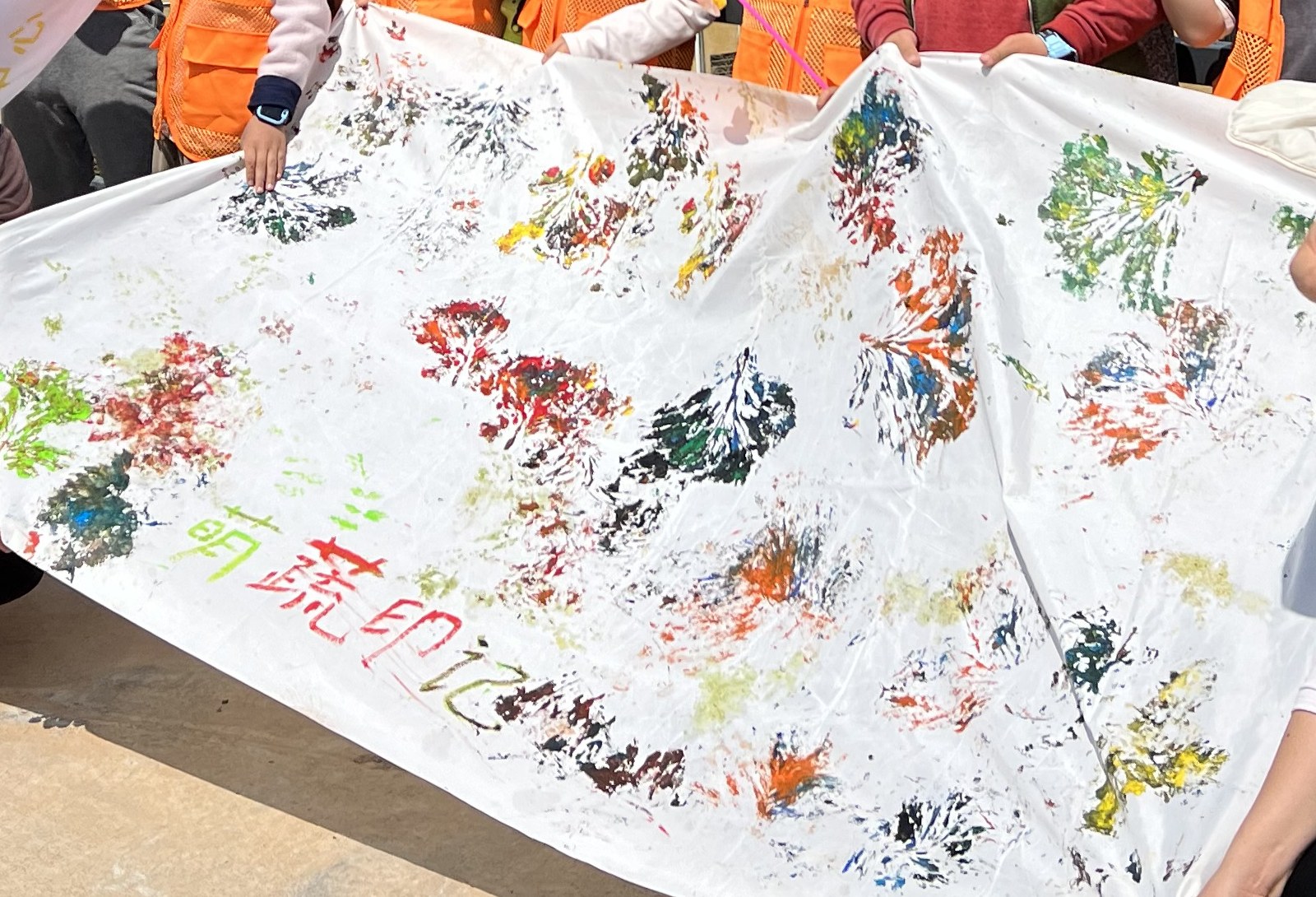
A visiting school group's leaf prints, held up at the end of the day. 萌蔬印记 — the marks the plants left.
A visit to Anxi, a conversation between support teams, the tea itself, or the study-visit programme — tell us which of those brought you here and we will answer in writing.
We usually reply within two working days. Rieko Yano reads these herself.