That the waveform passes through the skin with less of the tingling associated with low-frequency stimulation, and that current reaches deep muscle. No independent measurement has been made.
 PROURGN
合同会社プロウン · TOKYO
Menu
TERApy · TERADA's Impulse Therapy · developed in Japan
TERApy: TERADA's Impulse Therapy, developed in Japan.
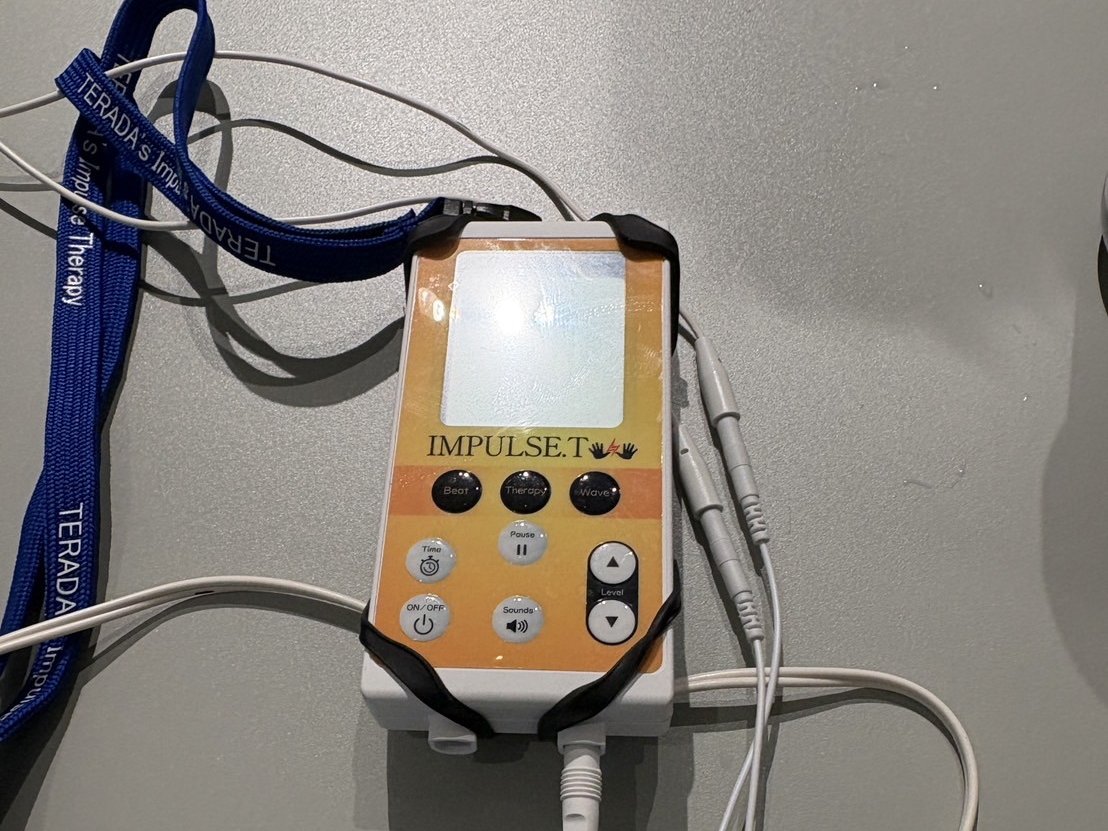
A 10–20 minute procedure given by a trained operator through conductive gloves or pad electrodes, built around a battery-powered EMS device, Impuls.T (marked IMPULSE.T on the unit).
What: a method (TERApy) and a portable EMS device (Impuls.T), developed in Japan.
For whom: clinicians, investors, foundations, distributors and organisations such as iKure, outside Japan.
Status in Japan: the device, Impuls.T, is sold as a wellness device, not an approved medical device. It is not intended to diagnose, treat, cure or prevent any disease. Its classification in India has not been established.
What we ask of you: a conversation first, then a demonstration or an evaluation.
What it is used for
Where the provider's practitioners apply it.
The provider's application chart is organised around locomotive syndrome, the Japanese term for age-related decline of the musculoskeletal system, together with the everyday pain presentations a judo-therapy clinic sees. In Mr Terada's own practice the three most common are stiff shoulders, lower back pain and knee pain. The stated purpose is to keep up muscle strength and range of movement in people who can no longer train hard themselves.
Each row is a use the provider reports, named as the provider's chart names it, with the chart's own Japanese label beneath so that each row can be matched to the picture: who it typically concerns outside Japan, and where it is applied. Applied through the operator's conductive gloves or pad electrodes, depending on the site; the chart shows the areas worked. Sessions: 10–20 minutes, 1 to 3 times a week for 1 to 2 months (the provider's general protocol). A use listed here is not a claim that the device treats it; the weight the evidence can bear is set out under Evidence below.
- Tripping and toe-catching (locomotive syndrome)つまずき改善Who: older adults whose toes catch when they walk.Where applied: front of the shin (tibialis anterior) and the calf.
- Unstable knees膝のガクガク改善Who: older adults whose knees give way; the same muscles are the subject of the six-patient knee-surgery series under Evidence.Where applied: front and back of the thigh (quadriceps and hamstrings).
- Poor hip stability and standing balance腰のふらつき改善Who: older adults with poor balance in standing and turning.Where applied: side of the hip (gluteus medius).
- Acute low back pain腰痛(ギックリ腰)Who: working-age and older adults after a sudden strain (the chart's own label is lumbago).Where applied: lower back, paired with a point on the lower leg; given lying down.
- Acute neck strain, whiplash首の筋ちがい/むちうち症Who: adults after a neck strain or a road accident.Where applied: neck and shoulder, paired with a point on the arm.
- Stiff shoulders, shoulder and upper-back pain肩背痛/肩痛/肩Who: desk workers above all; known in Thailand as ‘office syndrome’.Where applied: base of the neck, shoulder girdle and upper back, paired with points on the arms.
- Sciatica坐骨神経痛Who: adults with pain running from the buttock down the leg.Where applied: buttock to calf along the back of the leg.
- Knee joint pain膝関節炎Who: older adults; the chart's own label is knee joint inflammation.Where applied: above and below the knee.
- Ankle sprain足首の捻挫Who: sports injuries; Mr Terada has accompanied professional athletes to training camps abroad.Where applied: around the ankle.
- ElbowひじWho: not stated; the chart names the site only.Where applied: along the arm above and below the elbow, with one point at the tip of the elbow.
- Foot足Who: not stated; the chart names the site only.Where applied: sole of the foot, paired with a point on the calf; both feet.
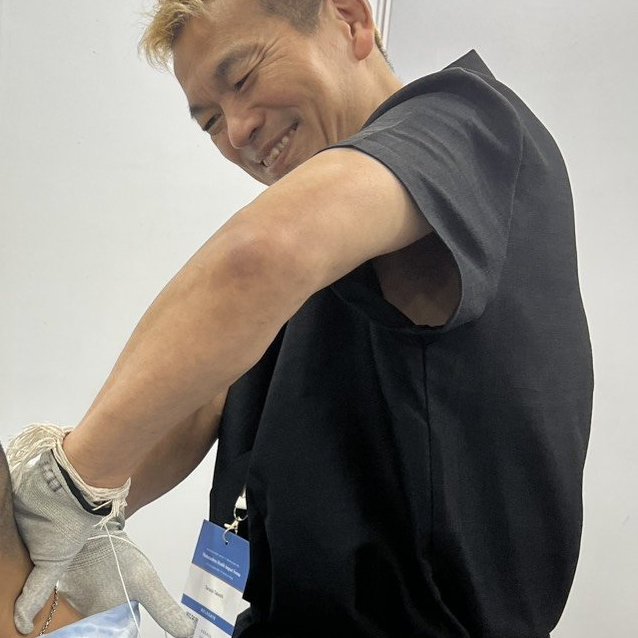
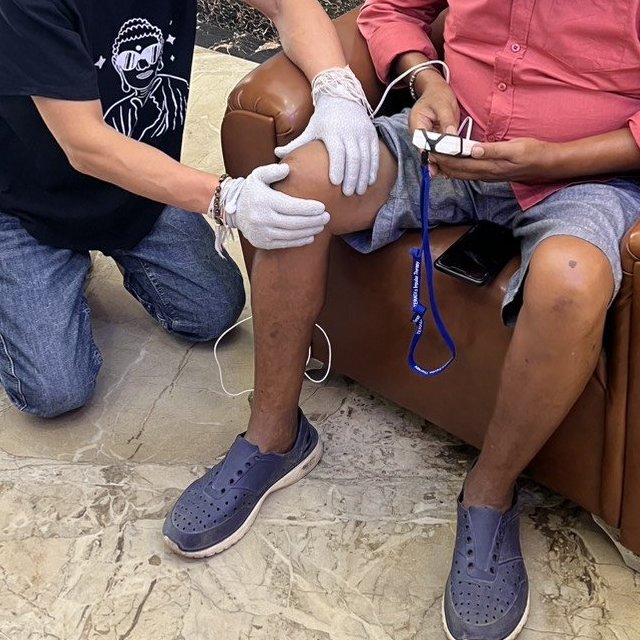
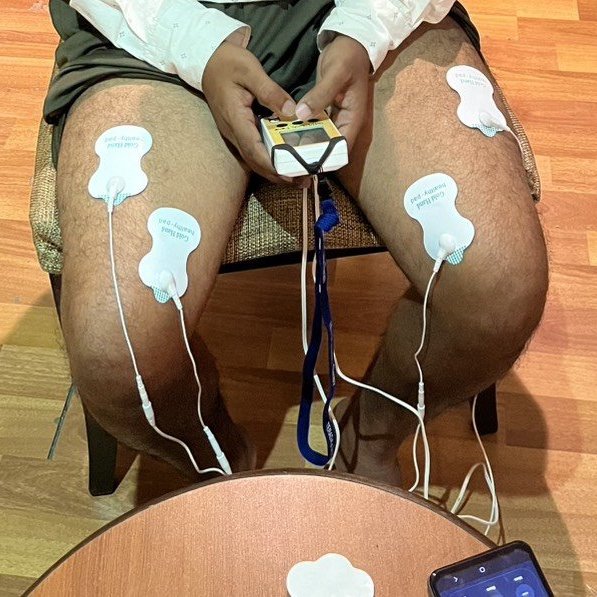
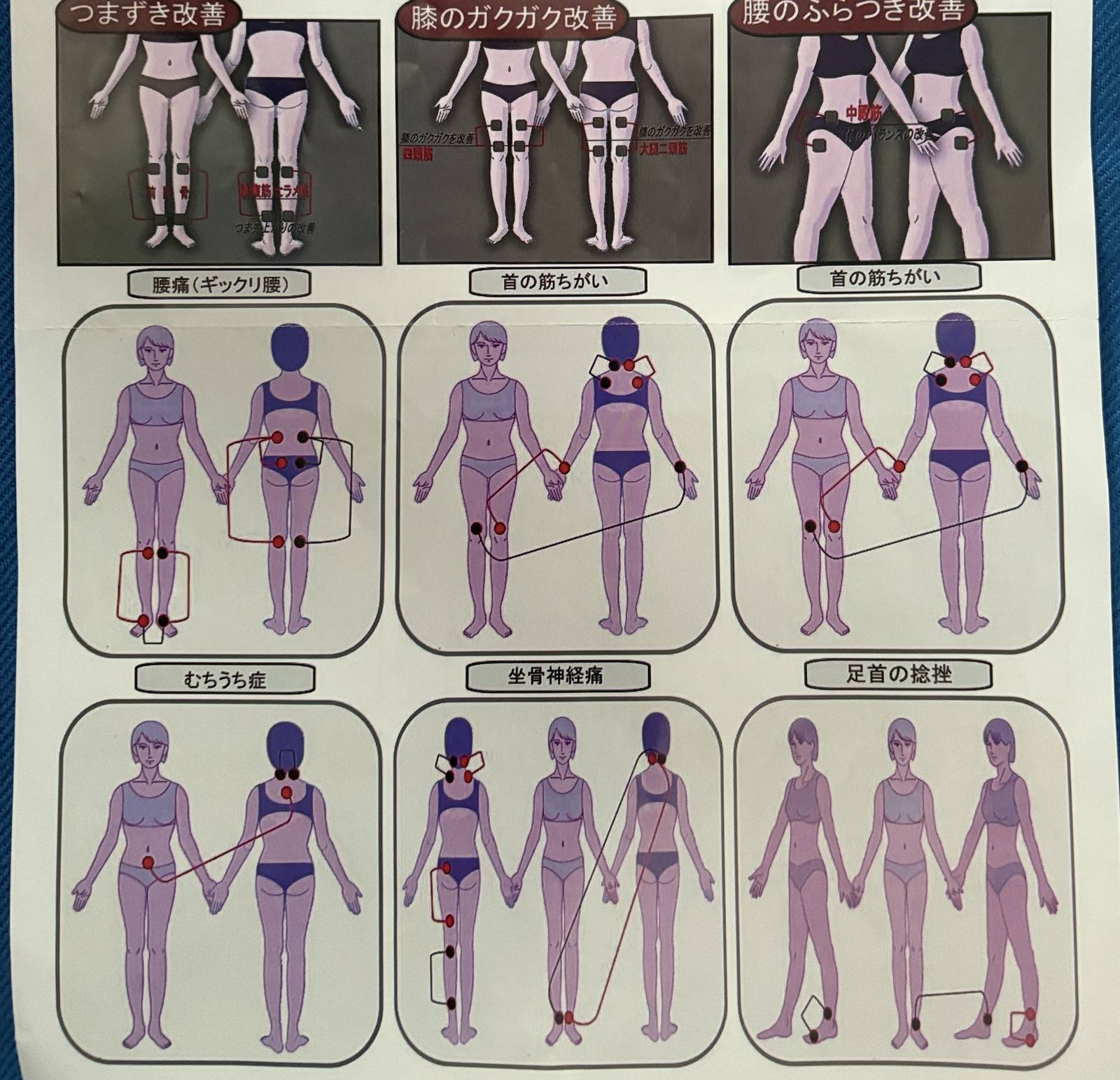
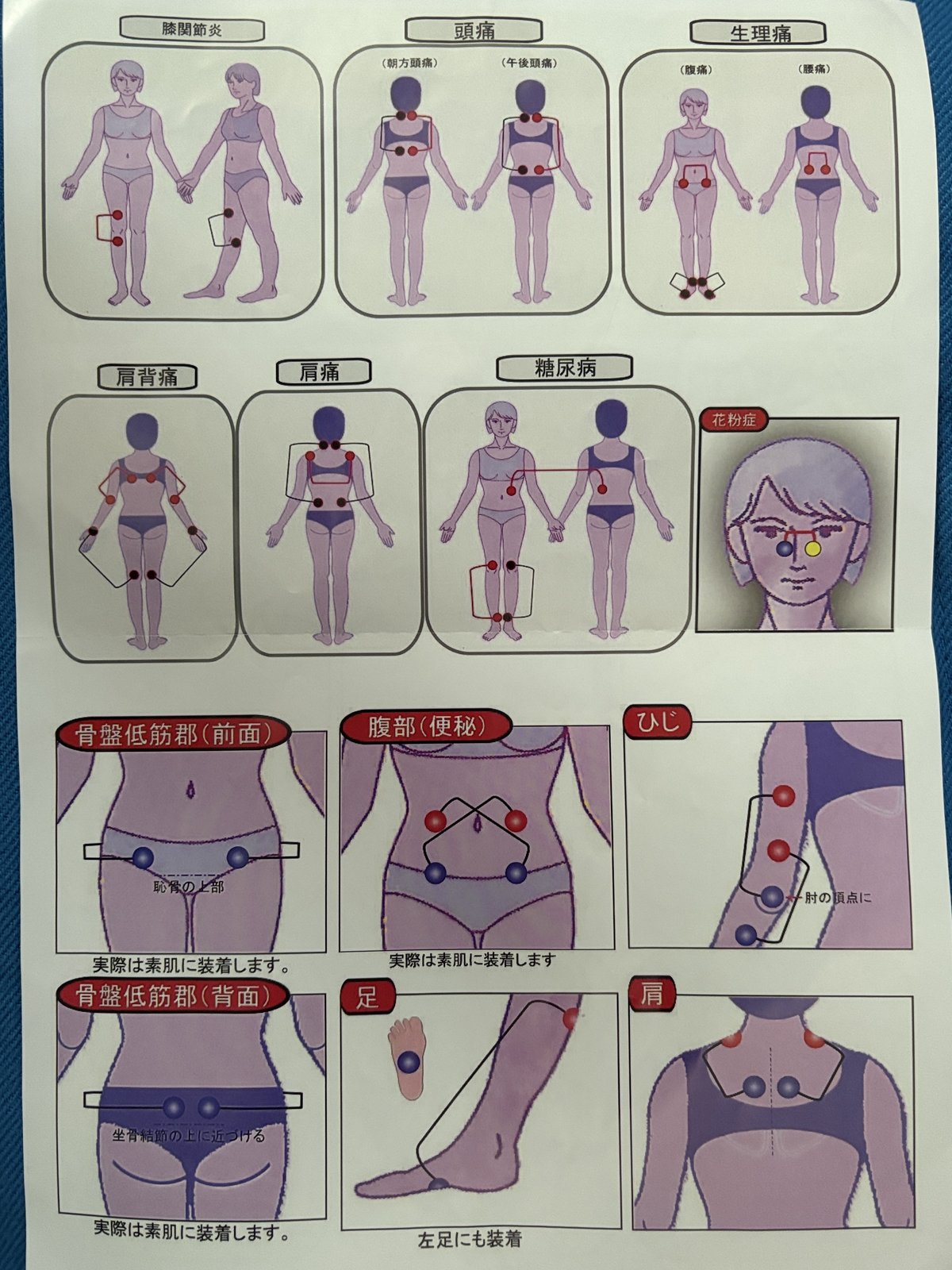
The chart also lists applications outside the musculoskeletal system (頭痛, 生理痛, 糖尿病, 花粉症, 骨盤底筋群, 便秘). These are the provider's own practice and are shown here as supplied; Prourgn makes no claim about them, and they have not been independently evaluated.
How a session runs, as Mr Terada described it: the operator wears conductive gloves and works along the spine, around the shoulder blades, over the deep abdominal and hip-flexor muscles and down the legs, with the person clothed and lying or seated. The output level is set low and raised in steps while the operator keeps talking to the person. Nothing is fixed to a stand; the unit hangs from the operator's neck.
Mechanism
A composite high-frequency waveform, as a published patent application describes it (later withdrawn; no patent granted).
Conventional low-frequency stimulation runs at 1,000 Hz or less. Impuls.T uses a high-frequency carrier, 200,000 Hz on the portable unit according to the manufacturer, modulated so that groups of positive and negative pulse trains alternate with rest periods, and the pulse frequency inside each group is swept between a higher and a lower value. The structure is set out in Japanese patent publication JP 2018-079272 A (Techno Lead Co., Ltd., “Waveform generator”, published 24 May 2018).
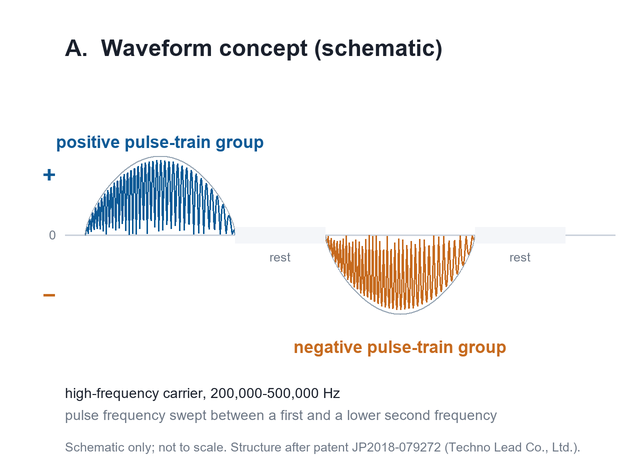
Wave: gentle stimulation and muscle relaxation. Beat: deep inner muscle that is hard to reach. Therapy: outer muscle in addition to inner muscle. These are the manufacturer's descriptions of purpose, reproduced as given.
A specification of the electrical output in measurable terms, output current, pulse width and duty cycle, has not been supplied to us. A regulator or an ethics committee will ask for it first, and so will we.
Evidence
No randomised controlled trials to date. Here is what exists, by level of evidence.
The provider's material lists twenty items of clinical evaluation work carried out at Japanese universities, hospitals and dental clinics with composite high-frequency devices. Eighteen are sorted below by the weight each kind of evidence can bear; the other two are studies described as ongoing, with no as-at date, and are not counted. Whether the devices used in that work are the same as the portable Impuls.T unit has not been established, and that is the weakest link in the chain.
- Peer-reviewedOne paper. Yamamoto K, Yamamoto T, Honjo K, et al. Electrical stimulation with periodic alternating intervals stimulates neuronal cells to produce neurotrophins and cytokines through activation of mitogen-activated protein kinase pathways. Eur J Oral Sci 2015;123(6):403–408. PMID 26510379.How to read it: an in vitro study on a mouse neuronal cell line, stimulated with the FREUDE pulse generator. Dental field, not musculoskeletal. It says nothing about outcomes in people. The provider's list cites this publication under a different title; the record given here is the one PubMed indexes.
- ConferenceEleven academic conference presentations, 2010 to 2020: dental hypoesthesia and nerve palsy (Kyoto Prefectural University of Medicine), muscle strength and deep vein thrombosis prevention after knee arthroplasty (Kyoto Prefectural Rehabilitation Hospital), and one biophysical evaluation reported to ISEK.How to read it: abstracts, not full papers, and not peer-reviewed in the journal sense. Useful as a map of who has looked at the technology, and for what.
- InstitutionalSix in-house reports and case series, 2002 to 2014: a six-patient series after knee surgery, a hospital report on muscle recovery after fracture surgery, a university comparison against physical exercise, and three dental-clinic reports on nerve palsy.How to read it: small, single-institution, no control group. The knee series is the most concrete numerical statement in the material (faster return of strength when the device was used from day one after surgery), and exactly the kind of claim a demonstration followed by a small structured evaluation could test.
- PractitionerMr Terada's own practice in Nara, and the wellness settings in Thailand and Viet Nam where the method is in use.How to read it: experience, reported by the provider. Presentations most often seen are stiff shoulders, lower back pain and knee pain. Not evidence of efficacy.
Effects described anywhere on this page are the provider's reports, not findings Prourgn LLC has verified.
Safety
What the operator checks, and who the device is not for.
According to the product documentation, as reported by Mr Terada, the device is not to be used on people with implanted devices such as cardiac pacemakers, on women who are pregnant, over skin disease or open wounds, or on people with malignant tumours. We are asking for the document itself so that the original wording can be read.
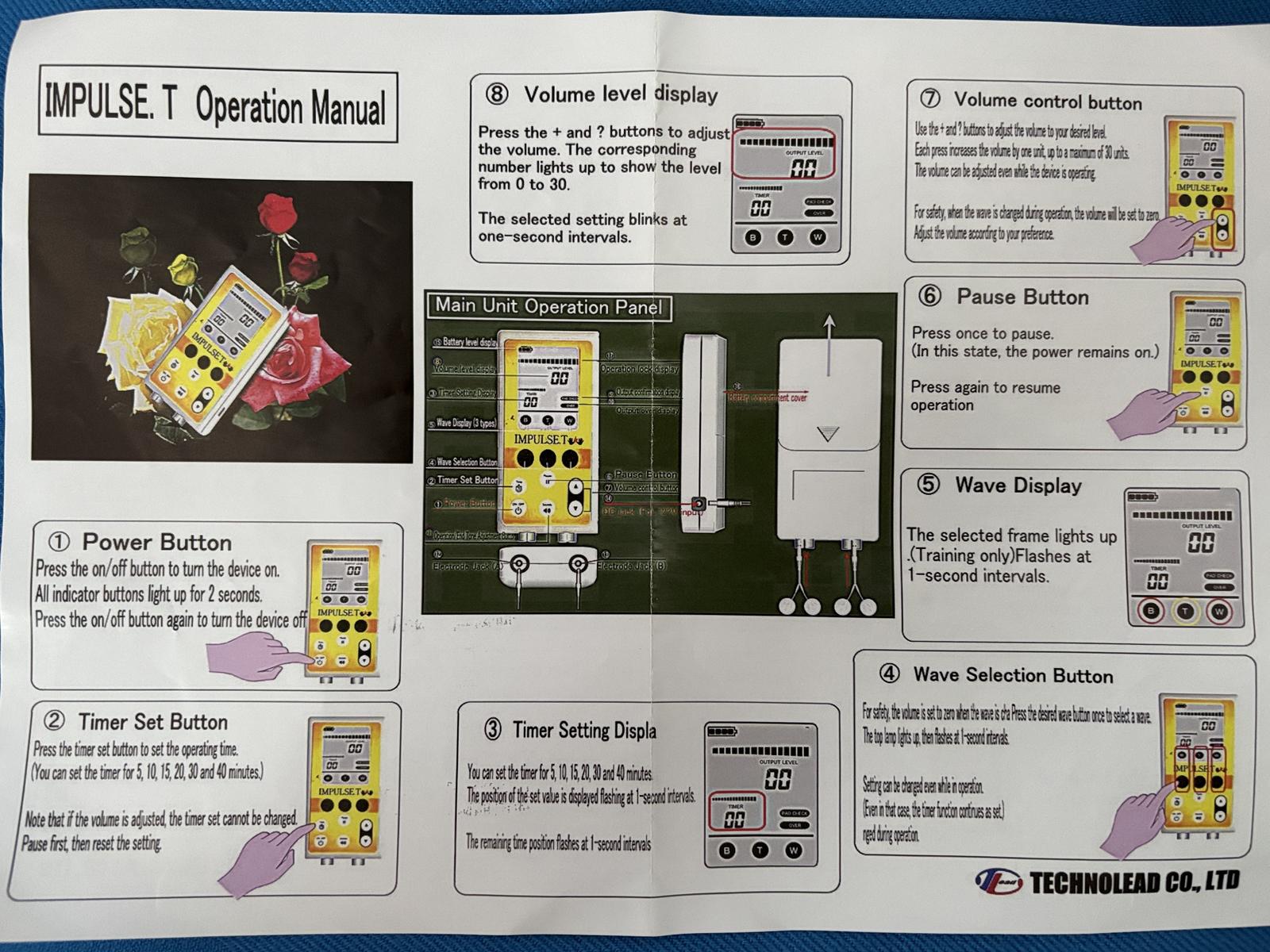
The portable unit runs on its battery, so nothing is connected to the mains during a session. Output is set on a scale of 0 to 30 and, by design, returns to zero whenever the wave mode is changed during operation. The timer runs 5 to 40 minutes; a session is 10 to 20. The operator checks the output level often and keeps up a conversation with the person on the table.
We have not been given an adverse-event record. The manufacturer's material states that the waveform places little load on the cardiopulmonary system; that is the manufacturer's statement and has not been independently verified.
Regulatory status
Status by country, including where none has been established.
What Prourgn LLC knows as of November 2026, gaps included.
- JapanDistributed as a health and wellness device (健康機器). Not an approved medical device; no Japanese medical device approval number.What that means: no therapeutic efficacy may be advertised for it in Japan. The manufacturer, Techno Lead Co., Ltd., holds a Class II medical device marketing authorisation as a company; that is a company licence and says nothing about this product's classification.
- IndiaNot established.What that means: whether the device falls within a notified CDSCO category, which import route applies to a demonstration or pilot, and who may lawfully administer it are open questions. Japan's classification does not carry over. These are being worked through with iKure and will need Indian counsel.
- ThailandIn use in wellness settings. A Thai FDA application was referred to in the provider's material; its status is unknown to us.What that means: treat as unregistered until the application status is confirmed.
- Viet NamIn use in wellness settings. No registration is known to us.What that means: treat as unregistered.
This table is a statement of what Prourgn LLC knows as of November 2026. It is not regulatory advice.
Track record
Three countries so far, all in wellness settings. India is the first conversation with a healthcare organisation.
Japan. Mr Terada's own clinic in Sakurai, Nara, where the method was developed and is practised daily, and where practitioners are trained.
Thailand. Massage salons, head spas and similar establishments, not clinics; units are also rented to individuals for self-care. Reported by the provider.
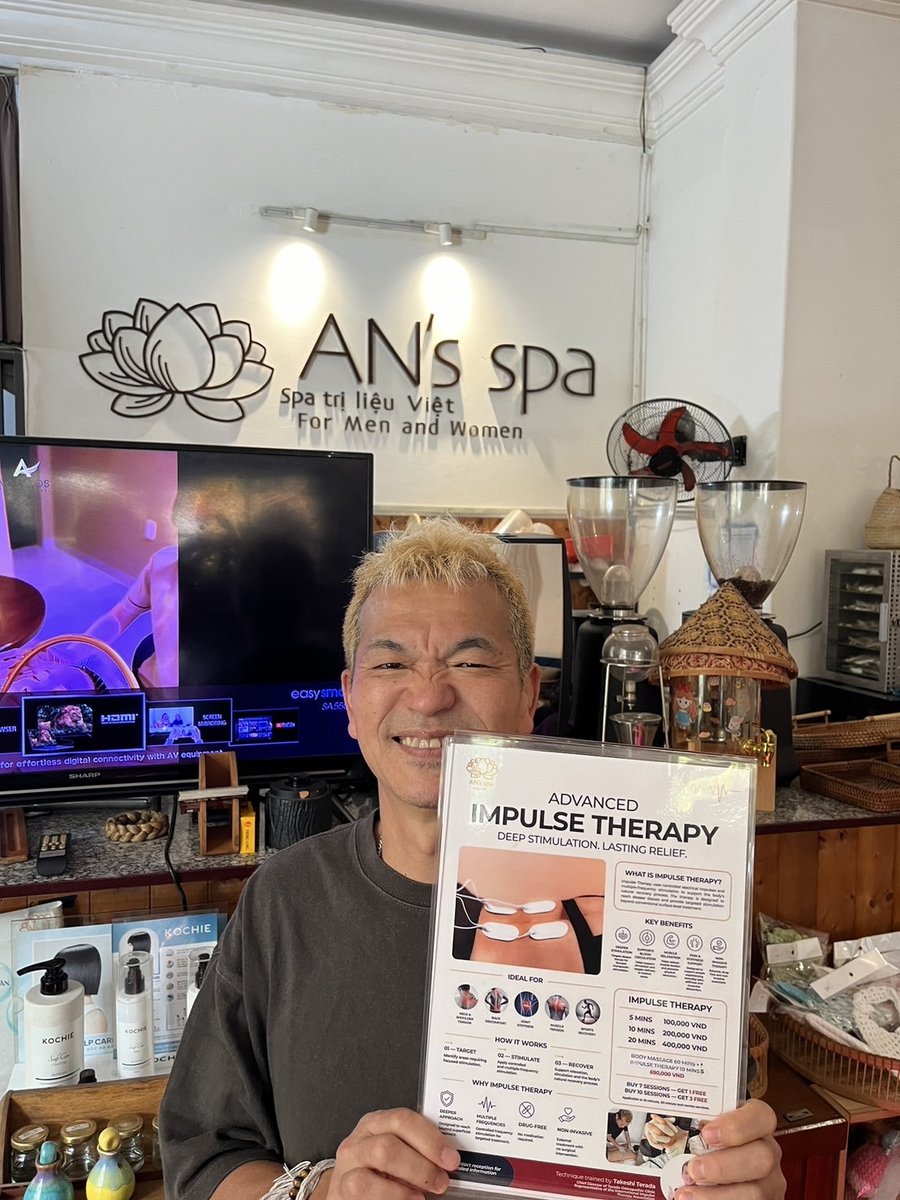
Viet Nam. Four massage outlets in Ho Chi Minh City, on the menu since August 2026. Reported by the provider.
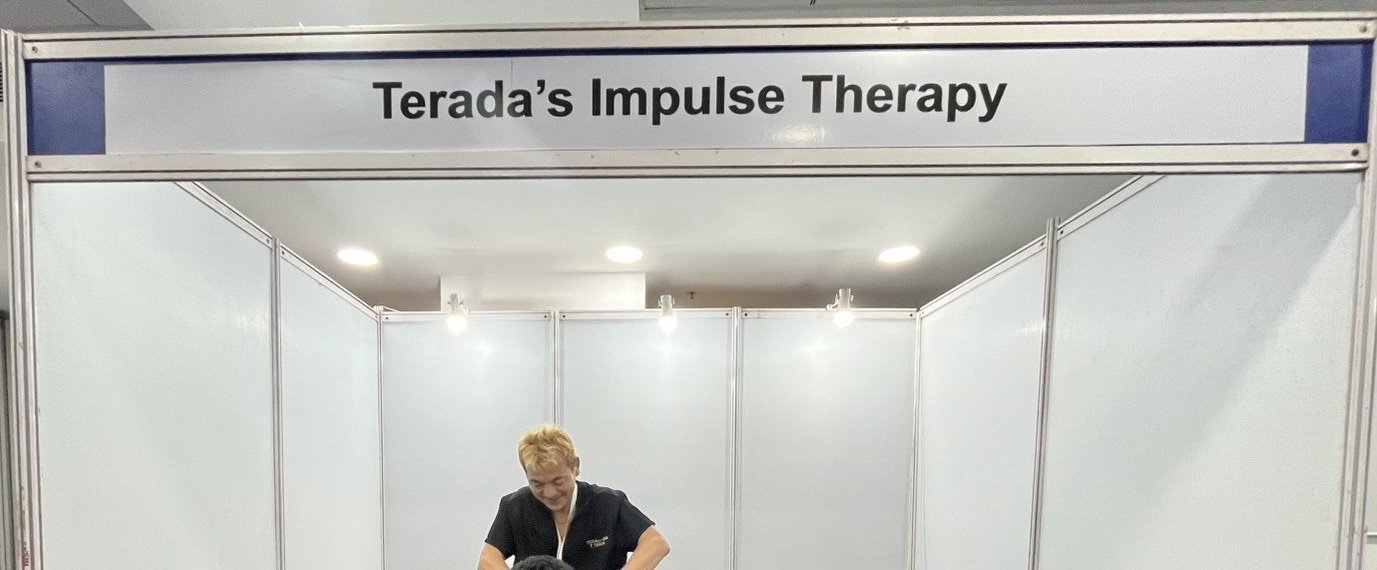
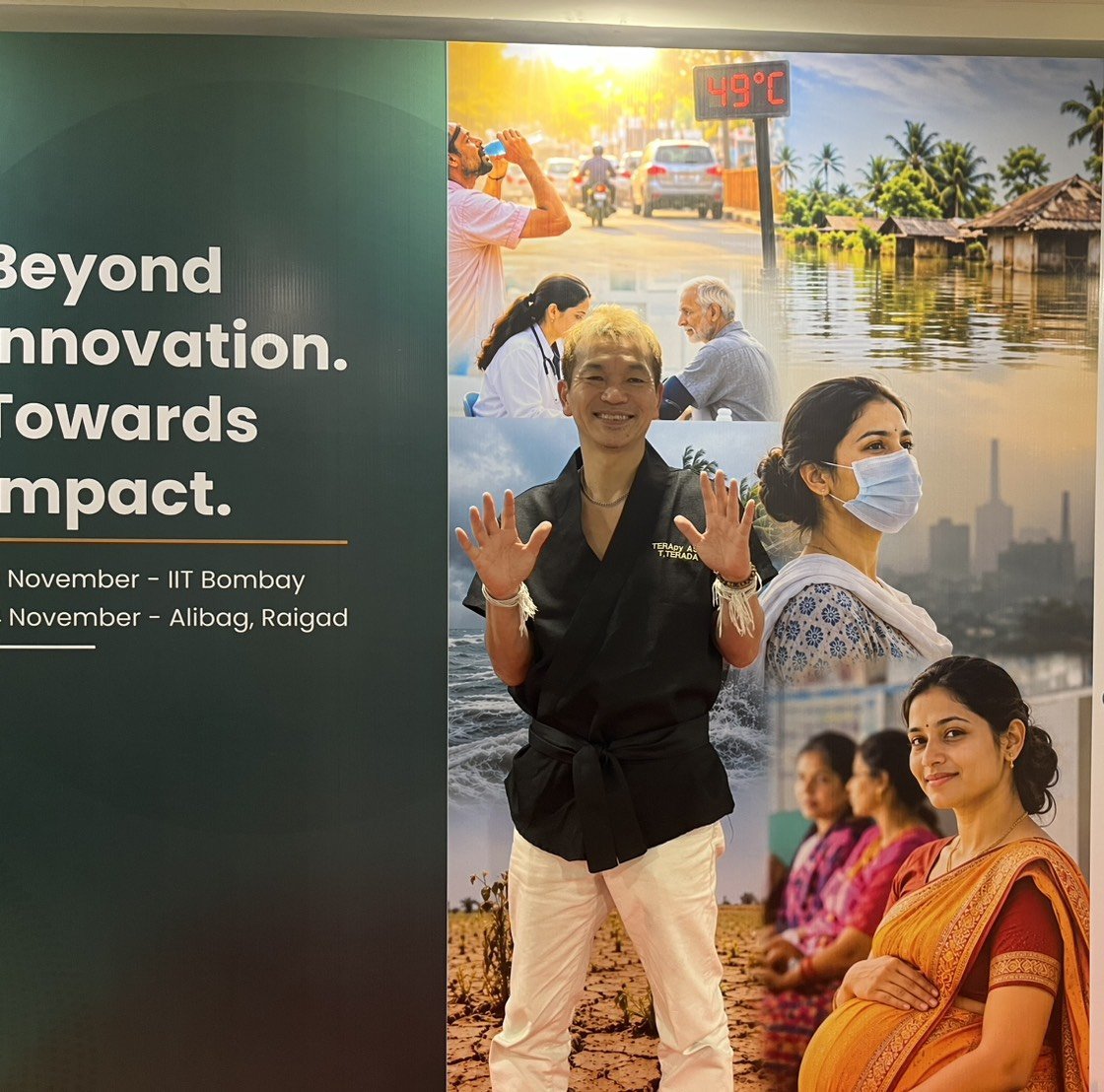
India. On 10 November 2026 Mr Terada demonstrated the procedure in person to the team of iKure Techsoft in Kolkata, step by step with the operator's checks visible, as the input to iKure's own decision on whether the procedure transfers to its community health workers. That decision is iKure's, and it is open.
People
A licensed therapist, a Kyoto manufacturer, and the company that introduces them.
The method is designed to be delivered by non-physicians, which is why it can be considered for community health workers. The person who built it is a licensed therapist, not a physician.
Mr Takeshi Terada
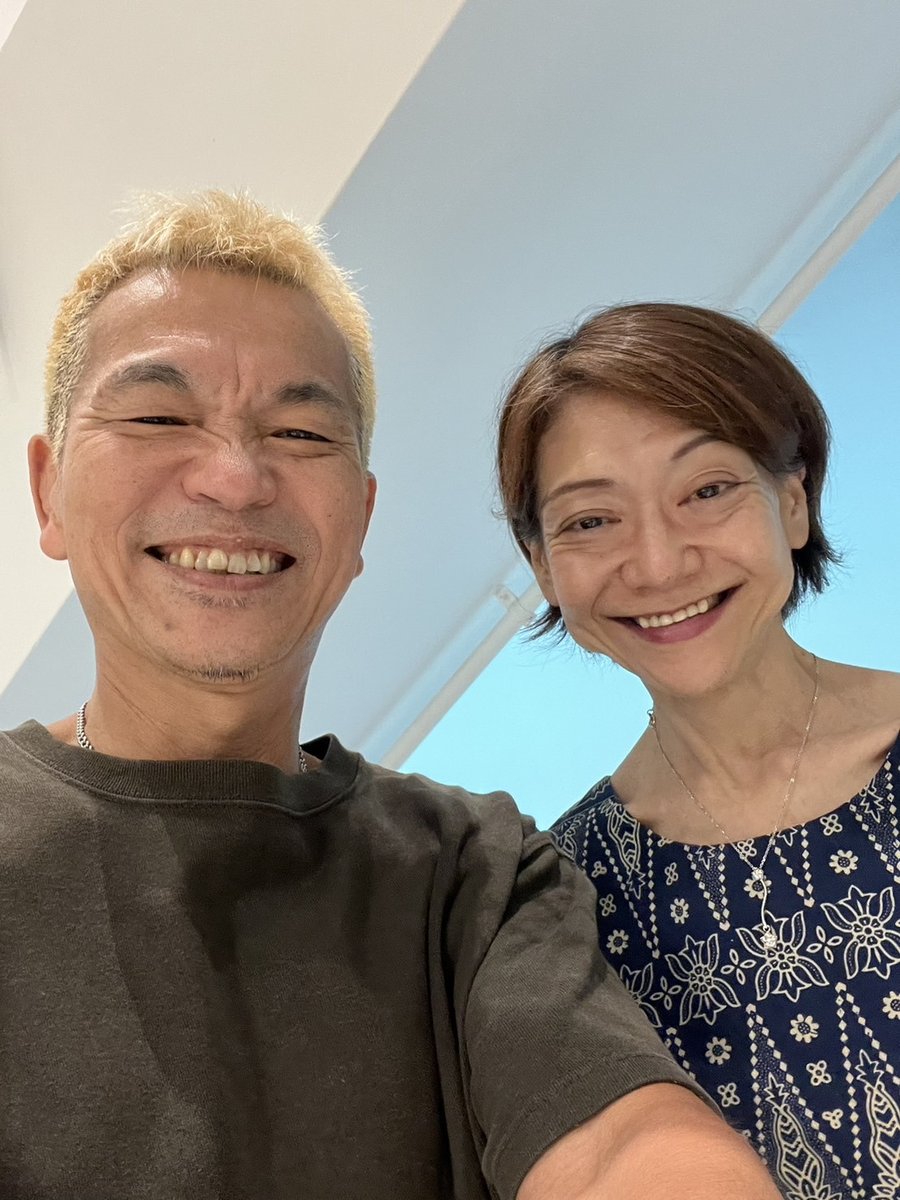
Judo therapist (柔道整復師, a Japanese national licence) and head of the Terada Judo Therapy Clinic in Sakurai, Nara. Representative of the Impulse Therapist Association (一般社団法人 インパルス療法士協会, a general incorporated association) and of Sekai Seifuku Co., Ltd. (世界整復株式会社). He developed TERApy, TERADA's Impulse Therapy, around the device, trains the practitioners who use it, and conducted the Kolkata demonstration himself.
Techno Lead Co., Ltd., Kyoto
Manufacturer of the device and applicant for the waveform patent application cited above (withdrawn; no patent granted). Holds a Class II medical device marketing authorisation as a company, which is separate from the classification of this product.
Techno Lead website (Japanese) ↗Prourgn LLC, Tokyo
Introducing party and single point of contact. Prourgn is a shareholder and board adviser of iKure Techsoft in Kolkata, and brought Mr Terada and the device to India. Prourgn has not independently verified the provider's statements on this page and does not warrant them. About the founder: Rieko Yano.
Next step
Ask for a demonstration, a structured evaluation, or a conversation
Four reasons to write, one address. Tell us which of these brought you here: a demonstration for your team, a structured evaluation, a partnership or distribution for your country or organisation, or a question about anything on this page.
Prourgn LLC is the introducing party and the single point of contact. Rieko Yano reads these herself and brings Mr Terada and the manufacturer into the conversation as needed. We usually reply within two working days.
The device, Impuls.T, is sold in Japan as a wellness device, not an approved medical device. It is not intended to diagnose, treat, cure or prevent any disease. Its classification in India has not been established.